Cat Carriers and Transporters: How to Choose the Right One for Your Cat
Cat Carriers and Transporters
Cat Carriers and Transporters
Cat carriers and transporters are an essential part of every cat owner’s equipment. Whether you’re going to the vet, taking a trip, or just heading out for a short walk, a reliable cat carrier ensures your cat’s safety and comfort.
Choosing the right cat carriers and transporter can be challenging, but it’s important to understand the different types available and their pros and cons. In this guide, we’ll go over various models to help you select the best option for your specific needs and your cat’s temperament.
Types of Cat Carrier and Transporters
There are several main types of cat carrier and transporters available on the market:
Each of these types has specific features that suit different situations and owner preferences. Understanding these differences is essential to making the right decision for both you and your cat.
Plastic Cat Carrier and Transporters
Plastic cat carrier and transporters are made from sturdy and durable materials, such as rigid plastic with metal doors. Ventilation holes on the sides and top provide excellent airflow, ensuring comfort for your cat during travel.
There are models with front access, as well as those with a top-loading design. Based on our experience, top-opening carriers are less stressful for cats. For example, during vet visits or vaccinations, it’s often possible to open the top without removing the cat entirely, allowing the vet to perform the procedure while the cat remains inside. In contrast, front-only carriers often require you to pull the cat out, which can be stressful.
Most plastic carriers include a carrying handle and a detachable top half, making it easy to access the cat and clean the carrier. Their solid construction makes them ideal for all types of transportation, from short car rides to long-distance travel.
Pros
Exceptional strength and safety, reducing the risk of injury to the cat during transport.
Ease of cleaning thanks to smooth surfaces and detachable components.
Durability of materials, making them a cost-effective long-term choice.
Versatile use – ideal for vet visits, car travel, or short-term storage.
Cons
Heavier compared to other types of carriers, which may be inconvenient for some pet owners.
The rigid structure may reduce comfort for the cat during longer journeys.
Plastic carriers are ideal for vet visits and short car rides. Their sturdy construction also makes them suitable for cats that are prone to stress, as they provide a sense of safety and protection.
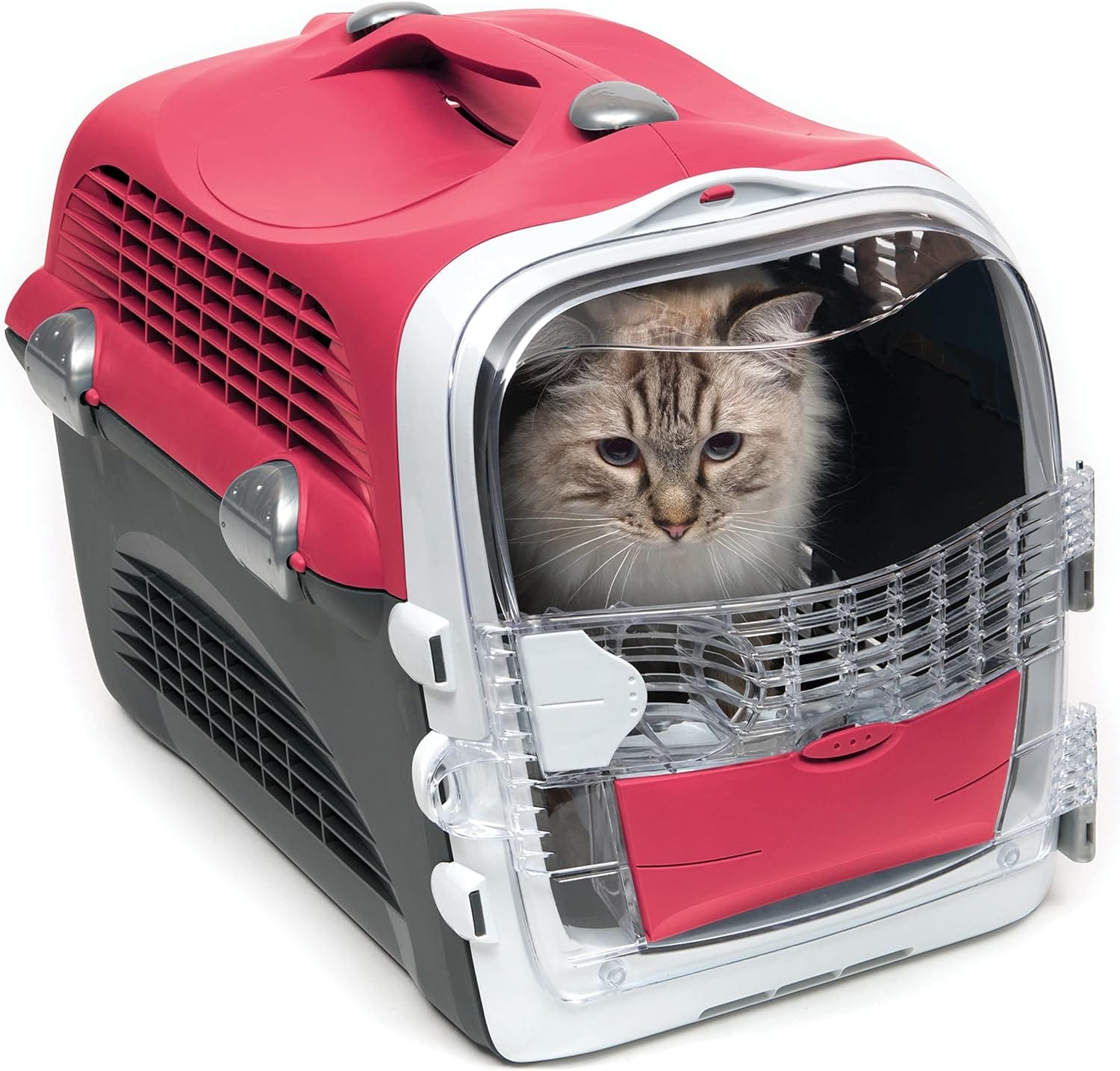
Catit Cabrio Transport Box
The Catit Cabrio Transport Box offers both safety and convenience with dual-entry doors (front and top), making it easier to access your cat. It’s ideal for vet visits, allowing examinations without needing to remove the cat. Spacious and well-ventilated, it helps reduce stress during travel.
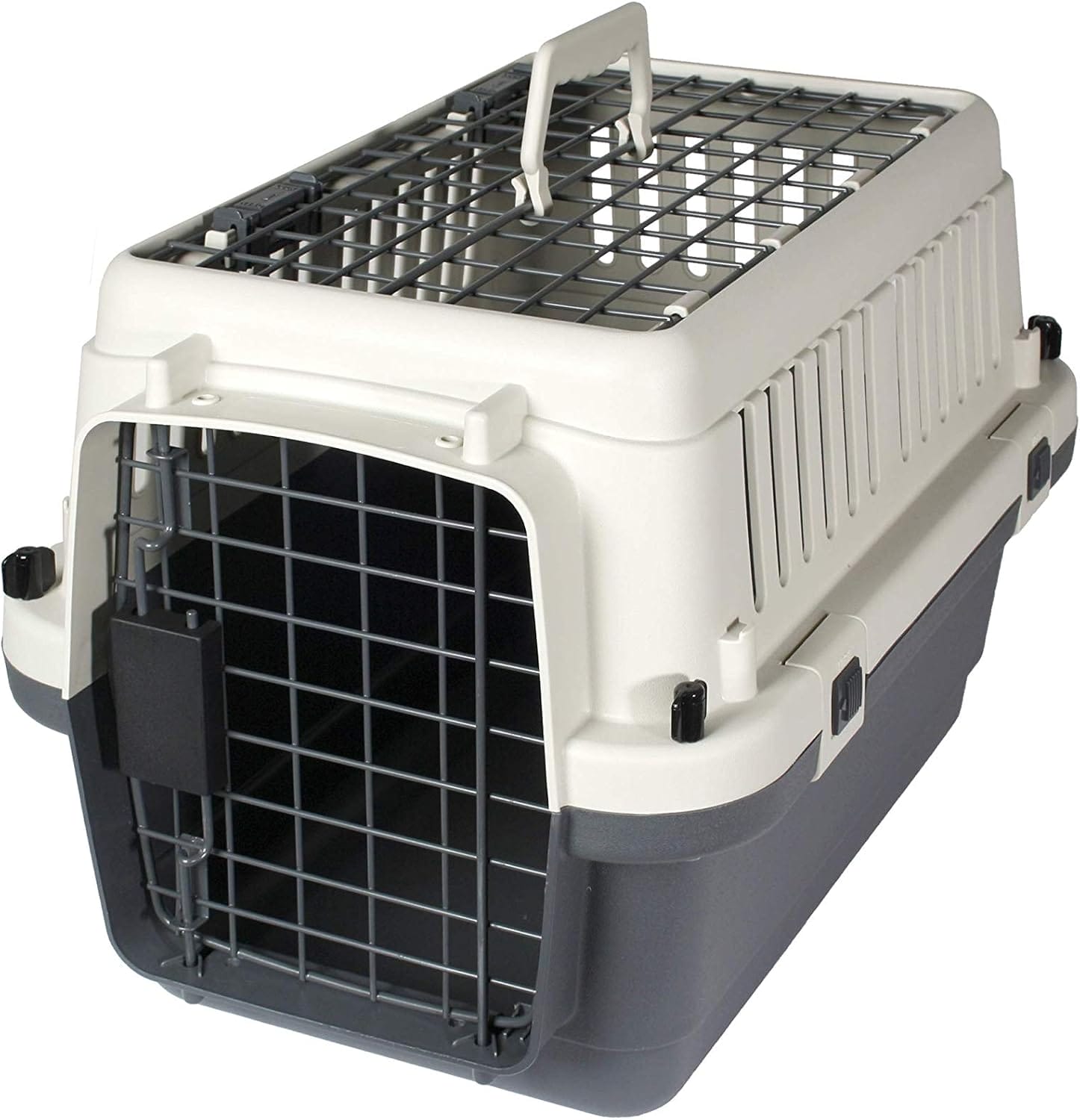
The Karlie Nomad Aircraft Box is a carrier designed for the safe and comfortable transport of cats and small dogs. Made from durable plastic, it meets the standards of many airlines. It features metal doors with dual locking mechanisms, ventilation openings for optimal airflow, and a handle for easy carrying. Its sturdy build and practical design make it ideal for long journeys, including air travel, while remaining convenient for everyday use.
Fabric carriers are lightweight, portable, and made from flexible yet durable materials like nylon or polyester. Many models come with soft inner padding for added comfort, while mesh ventilation panels ensure proper airflow. These carriers are especially popular among owners who frequently use public transportation or have smaller cats. Most fabric carriers are foldable, making them easy to store when not in use.
Pros
Extremely lightweight and easy to carry.
Soft materials and inner padding provide comfort for cats during short trips.
The foldable design saves space at home.
The attractive design makes them a modern choice.
Cons
They are not suitable for larger cats or those prone to biting or scratching the material.
More difficult to clean in case of accidents.
Less secure than plastic carriers, especially for longer journeys.
Fabric carriers are ideal for public transport or short trips within the city. They are suitable for calmer cats that are not prone to excessive stress.
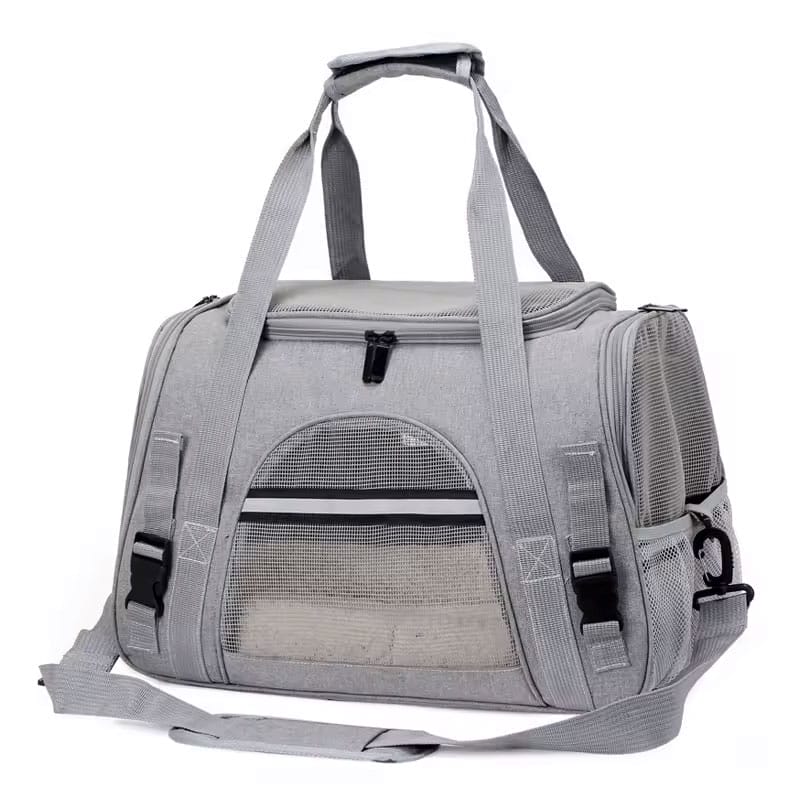
BERTASCHE Transport Bag for Cats
BERTASCHE Transport Bag for Cats up to 7 kg is a foldable pet carrier that combines practicality and comfort. Designed for cats and small dogs up to 7 kg, this carrier is made from durable yet lightweight materials. It features breathable mesh panels for optimal ventilation, secure zipper closures, and comfortable handles for easy carrying. Suitable for travel by car, train, or as carry-on luggage, the bag folds flat for convenient storage, making it an ideal choice for pet owners looking for a practical and stylish transport solution.
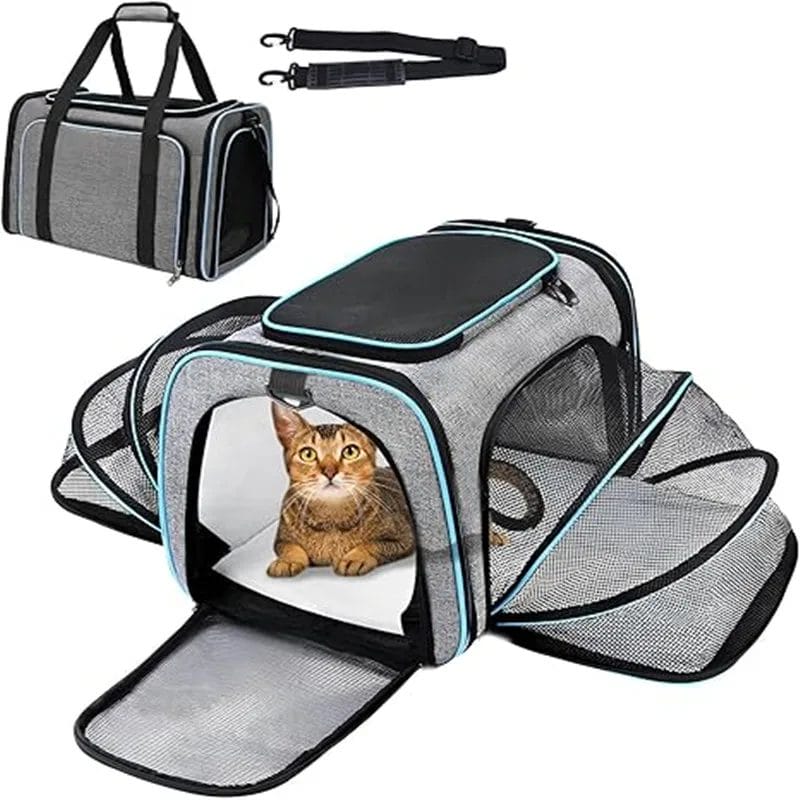
This foldable carrier is made from durable materials and features breathable mesh panels for optimal airflow, ensuring your pet’s comfort during travel. It comes equipped with secure zippers and an adjustable strap for easy carrying. The lightweight, modern design makes it ideal for travel by car, public transport, or as carry-on luggage. When not in use, the bag folds flat for convenient storage.
Portable Pet Carrier Bag is ideal for cats and small dogs up to 6 kg. Made from strong and durable material, it features mesh windows that provide excellent ventilation and allow your pet to look out during travel. Equipped with comfortable handles and an adjustable shoulder strap, this bag is easy to carry. It’s lightweight and foldable, making it convenient to store when not in use. Perfect for short trips, vet visits, or daily outings.
Cat backpacks are an innovative and practical choice for owners who enjoy outdoor activities. These backpacks feature transparent windows or large mesh panels that give cats a view of their surroundings, reducing feelings of isolation. In addition to providing comfort for the cat, the backpacks are designed with ergonomic support for the owner, including padded shoulder straps and additional chest or waist straps for even weight distribution.
Pros
They allow the owner to keep their hands free while carrying the cat.
Modern designs appeal to owners looking for an aesthetically pleasing product.
The space for the cat is large enough for short trips.
Ventilation systems ensure airflow and help reduce stress for your pet.
Cons
Not suitable for larger cats due to limited space.
The movement of the backpack while walking can cause discomfort for more sensitive cats.
Backpacks are perfect for hiking, longer walks, or short trips where owners want to keep their hands free.
PETKIT Cat Backpack with Built-In Fan and LED Light
PETKIT Cat Backpack offers an innovative design with a built-in fan and LED light for optimal airflow and visibility. Spacious yet lightweight, this backpack ensures comfort for your pet and convenience for you during travel. Ideal for outdoor adventures, it provides both safety and comfort, making it a reliable choice for modern pet owners.
Morpilot Cat Backpack for Cats and Kittens provides both safety and comfort during travel. With a breathable and foldable design, it includes an internal safety strap to keep your pet secure. The set also comes with a collapsible bowl for water or food, making it an ideal choice for active pet owners.
Cat strollers offer the most comfortable way to transport cats, especially over longer distances or when handling multiple cats. These strollers typically feature a spacious interior, ventilation panels, and weather covers to ensure comfort and protection. Designed with convenience in mind, they allow owners to push the stroller effortlessly without lifting any weight.
Many models also include extra storage compartments for essentials, making outings even more practical. Some strollers come with a detachable carrier top, allowing it to function as a standard cat carrier – providing flexibility for different travel scenarios.
Pros
They provide comfort for cats during long trips.
Suitable for owners with multiple cats.
The spacious interior allows cats to relax and move around comfortably.
Additional storage compartments make organization easier.
Cons
Impractical for everyday use due to larger dimensions.
Higher price compared to other types of cat carriers.
Cat strollers are ideal for cat shows, long-distance travel, or situations where the highest level of comfort for your pet is needed.
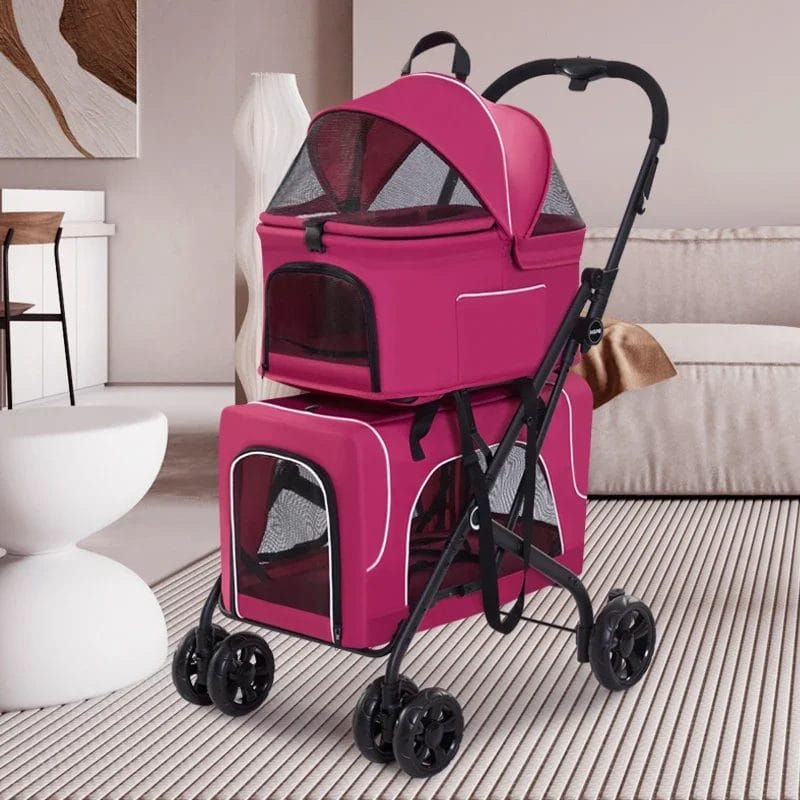
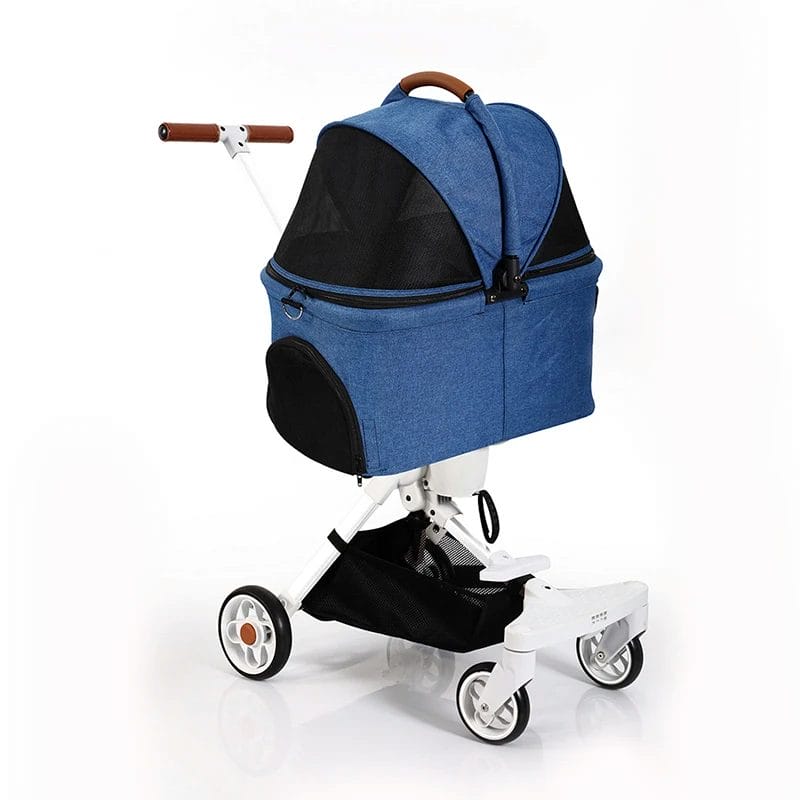
SPRINGOS cat stroller
SPRINGOS cat stroller is ideal for owners of multiple cats or larger pets up to 22 kg. It features two levels for accommodating several cats, a telescopic handle with a locking mechanism, and sturdy wheels for easy maneuvering. Its practical design ensures comfort and safety for your pets during transport.
A luxurious four-wheel pet stroller, ideal for transporting two cats or a cat and a small dog at the same time. This practical and spacious model ensures comfort and safety for your pets during walks or travel. With a modern design, the stroller is easy to maneuver and folds away effortlessly.
Four-wheel pet stroller with a foldable design and fabric carrier, ideal for walks, travel, and transporting cats or small dogs. This model offers stability, convenience, and comfort for pets, while the stylish fabric carrier adds a modern touch. Easy to fold and carry when not in use.
Size: The carrier should be spacious enough for your cat to stand up, turn around, and lie down comfortably. Materials: Look for durable materials that are easy to clean and maintain. Safety Features: Ensure the carrier has sturdy doors and proper ventilation to keep your cat secure and comfortable. Practicality: Consider ease of carrying, foldability, and extra features like shoulder straps or multiple access points.
How to Help Your Cat Get Used to a Carrier
Cats react differently to carriers depending on their temperament and past experiences. Some accept them easily, while others may resist or become stressed. Helping your cat get used to a carrier takes patience and a gradual approach:
Place the carrier in your home: Leave the carrier open in an area where your cat spends a lot of time. This allows the cat to view it as a normal part of its environment.
Create positive associations: Place your cat’s favorite toy, blanket, or some treats inside the carrier to link it with positive experiences.
Introduce the carrier gradually: Let your cat explore the carrier freely. Once it seems relaxed, start closing the door for short periods, followed by rewards.
Practice short movements: When your cat is comfortable inside, carry the carrier around the house for a few minutes to get them used to movement.
Start with short drives: Begin with brief car rides, slowly increasing the duration to help your cat adjust to motion and car sounds. This can greatly reduce stress during longer journeys.
One common mistake owners make is only using the carrier for vet visits. Cats quickly associate it with stress or unpleasant experiences. To avoid this, use the carrier in neutral or positive situations, keep it open at home as a cozy resting place or use it for short trips even when unnecessary. This helps the cat see the carrier as a normal, safe space, rather than a sign of something negative.
Cat carriers come in various styles and sizes to suit different needs. Hard plastic carriers offer safety and durability, soft-sided carriers are lightweight and convenient, backpacks are ideal for active owners, and strollers provide the most comfort for longer outings. Choosing the right carrier ensures a stress-free experience for both you and your cat.
We use cookies on our website to give you the most relevant experience by remembering your preferences and repeat visits. By clicking “Accept All”, you consent to the use of ALL the cookies. However, you may visit "Cookie Settings" to provide a controlled consent.
This website uses cookies to improve your experience while you navigate through the website. Out of these, the cookies that are categorized as necessary are stored on your browser as they are essential for the working of basic functionalities of the website. We also use third-party cookies that help us analyze and understand how you use this website. These cookies will be stored in your browser only with your consent. You also have the option to opt-out of these cookies. But opting out of some of these cookies may affect your browsing experience.