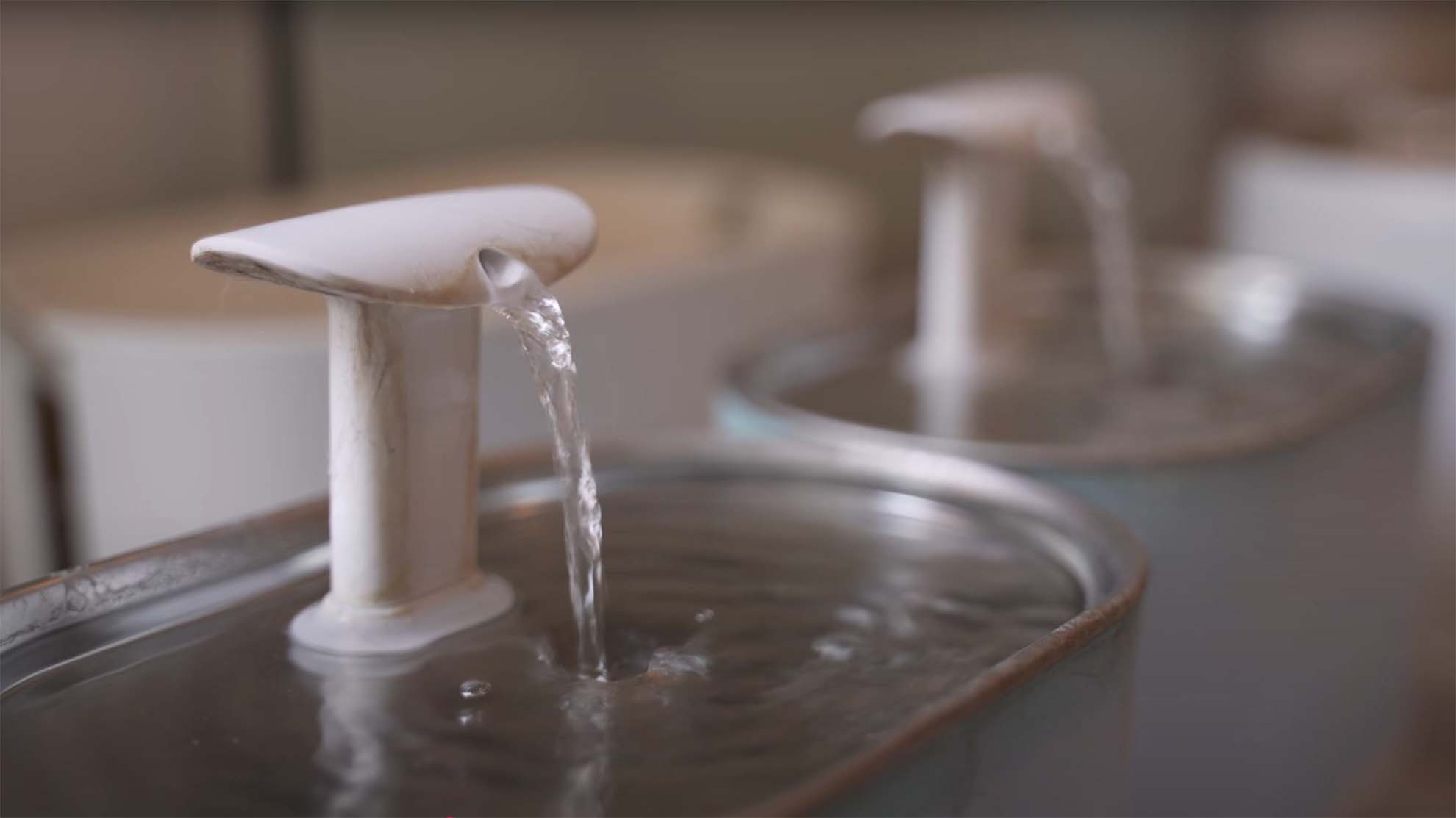
If you are wondering whether your cat really needs a fountain or whether a regular bowl is perfectly fine, the short answer is this: a good cat fountain can be a lovely choice for a cat that enjoys running water, as long as it is easy to take apart and clean regularly. In a home with several cats, you quickly learn that apps and indicator lights are not the most important things. Quiet operation, easy-to-find filters, a large enough reservoir and as few awkward corners as possible matter much more.
We will not overwhelm you with ten nearly identical models in this guide. Instead, we will show you how to choose the right material and size, what to check before buying, and a few fountains that make sense for different homes and budgets. The best cat water fountain is not necessarily the most expensive one. It is the one your cat accepts and you can keep clean without turning it into a chore.
Cat fountains: our quick selection
- For a first fountain and a smaller budget: Catit Flower Fountain, a simple model with a generous capacity.
- For stability and easy cleaning: the ceramic TRIXIE Vital Falls.
- For most homes: the PETLIBRO model with a stainless-steel drinking surface.
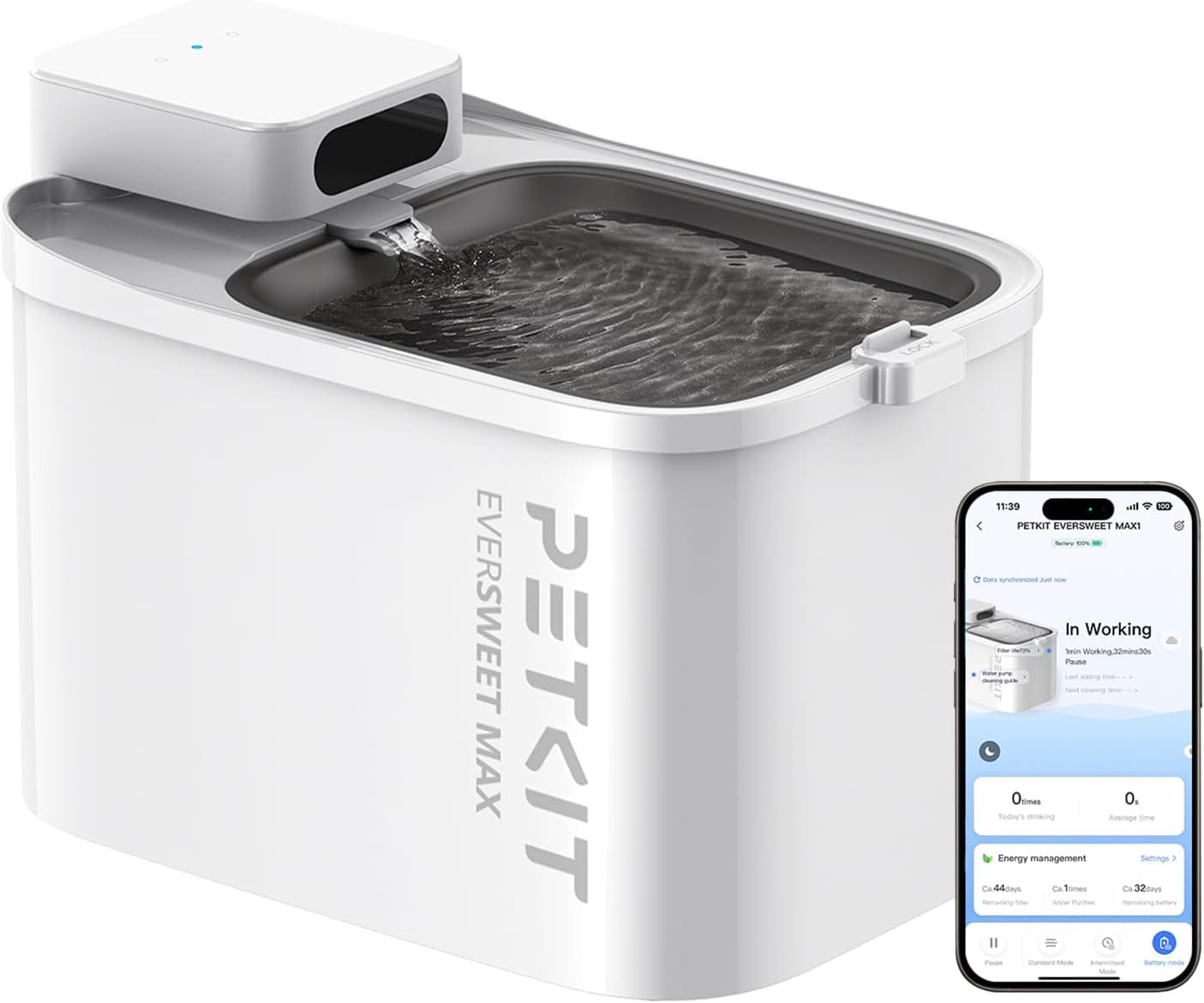
- For several cats or more freedom when choosing a location: the 3-litre cordless PETKIT model.
Affiliate note: As an Amazon Associate, we earn from qualifying purchases. The price stays the same for you, while purchases made through our links help us create new guides.
Why do some cats prefer running water?
Cats are wonderfully individual about water. Some will happily drink from an ordinary bowl, while others are fascinated by movement and wait for you to turn on the tap. A drinking fountain can make water more interesting for those cats and encourage them to visit it more often. That does not mean every cat will automatically drink more, so watch your own cat instead of relying on the promise on the box.
Drinking enough water matters in everyday life, especially for cats that eat a lot of dry food. A fountain is not a treatment and cannot prevent kidney or urinary tract disease. If your cat suddenly drinks much more or less, urinates frequently, strains or seems unwell, speak to your vet rather than buying a new device.
Which fountain is best for your cat?
There is no single fountain that suits every cat. A cautious cat may avoid one that splashes loudly, while a curious cat may first try to take it apart with a paw. If you live with several cats, a larger reservoir and easy daily refilling will probably matter more. If the fountain sits close to where you sleep, a quiet pump will be more useful than an app.
That is why we grouped our recommendations by real situations at home, rather than by which product has the longest list of features.
Catit Flower Fountain 3 L – a good first fountain
Recommended for New Owners
A simple, spacious fountain with three water-flow settings. It is a sensible first choice if you want to see whether your cat accepts a fountain, and replacement filters for Catit models are generally easy to find.
Who is it for? People buying their first fountain who want to see whether their cat will accept it without spending too much. Plastic needs a little more care during cleaning. Once deeper scratches appear or the surface is no longer smooth, it is time to replace it.
TRIXIE Vital Falls 1.5 L – a stable ceramic fountain
A ceramic model that stays stable thanks to its weight and has a smooth surface for easier cleaning. Its capacity is better suited to one cat or a home where the water is checked and topped up every day.
Who is it for? Cats that push lightweight bowls around and people who value a stable, smooth surface. Ceramic is heavier and can break, so it is better suited to a permanent spot than frequent moving.
PETLIBRO 2.1 L – practical with a stainless-steel drinking surface
Our Pick
A quiet, medium-capacity model with a stainless-steel top and visible water level. It is a practical choice for most homes that value simple maintenance and unobtrusive operation.
Who is it for? Most households looking for a good balance of hygiene, quiet operation and simple maintenance. With a metal-topped model, check which parts that touch the water are actually stainless steel and which are plastic.
PETKIT 3 L – a cordless smart fountain for several cats
Ideal for Multi-Cat Households
A larger reservoir, cordless operation and smart notifications make this model interesting for several cats or a place without a nearby socket. Check the current price and availability of the correct PETKIT filters before buying.
Who is it for? Homes with several cats and anyone who wants to place the fountain away from a socket. Smart features can be useful, but check the price and availability of replacement filters before buying because that cost remains long after the initial purchase.
Types of cat fountains: plastic, ceramic or stainless steel?
Plastic fountains
Plastic fountains are usually the most affordable, they are lightweight and come in many shapes. They can be a good first fountain, but they need careful cleaning with a mild detergent and soft sponge. Scratched plastic is harder to clean thoroughly, and some sensitive cats may dislike the roughened surface.
Ceramic fountains
Ceramic is heavy, stable and pleasant to maintain while the glaze is intact. It is a good choice for cats that like to move everything, but the fountain needs careful handling and regular inspection. We would stop using a bowl that has cracked or chipped.
Stainless-steel fountains
Stainless steel is our most practical material for the surface a cat drinks from. It is smooth, does not absorb odours and is easy to wash. However, a product title can make a fountain sound entirely metal when only the top plate is steel. Look at photographs of every disassembled part, not just the main product image.
Automatic, cordless and smart fountains
Almost every modern fountain has a pump and filter. Cordless models give you more freedom when choosing a location, while smart fountains can warn you when the water is low or the filter needs changing. If you are looking for a battery-powered cat fountain, check how often it needs charging and whether the pump runs continuously or in intervals. An app is convenient, but it does not replace looking into the reservoir. With a smart model, also check whether it can work normally without a phone connection.
How to choose the right cat fountain
- Can the fountain be fully disassembled? If you cannot easily reach the pump, tubes and corners of the reservoir, keeping it clean will become harder over time.
- Are replacement filters available on Amazon.de? A fountain without the right filter soon becomes an ordinary bowl with a pump. Check the pack price and the manufacturer’s recommended replacement interval.
- How loud is the pump in a real home? Even a quiet pump gets louder when the water level drops or hair collects inside it.
- Is there enough room for your cat’s whiskers? A wide, shallow drinking surface is often more comfortable than a narrow stream where the whiskers touch the edges.
- What happens during a power cut? It helps if at least a little water remains accessible at the surface, or if there is always a backup bowl nearby.
- What is the real ongoing cost? Along with the price of the fountain, allow for filters, an occasional replacement pump and the time needed for cleaning.
Are cat fountains noisy?
A correctly assembled, full fountain should run quietly, but no pump is completely silent. The sound usually becomes noticeable when the water falls below the recommended level, hair catches around the impeller, or the fountain sits on a hard surface that amplifies vibration. A silicone mat can reduce vibration, and cleaning the pump often solves a sudden buzzing sound.
What capacity do you need?
For one cat, a reservoir of around 2 litres is usually practical. For several cats, we prefer 3 litres or more. A larger capacity does not mean the water should be changed less often. It simply gives you a little more room between top-ups and helps prevent the pump from running dry.
Do not plan around the very last drop. Hair, dust and small pieces of food can end up in the water, especially if the fountain sits close to the feeding area. In our home, we would rather take a quick look at the water every day than rely only on an indicator.
How to clean a cat fountain
A fountain is not something you switch on once and forget. Top up and replace the water regularly, and take the whole fountain apart for cleaning according to the manufacturer’s instructions. How often you need to do this depends on the number of cats, room temperature, amount of hair and the type of food nearby.
- Unplug or switch off the fountain before taking it apart.
- Remove the lid, filter and every part through which water passes.
- Open the pump housing if the manufacturer allows it and remove hair from around the impeller.
- Rinse everything well so no detergent smell remains.
- Prepare or replace the filter exactly as instructed for that model.
If the pump suddenly becomes loud, check the water level and impeller first. Very often the problem is not a fault but a strand of hair or a deposit that needs to be removed.
How to encourage your cat to use a fountain
Some cats walk up to a new fountain immediately, while others observe it from a polite distance for several days. Do not push them towards the water or remove their old bowl straight away.
- Keep the old bowl next to the new fountain for the first few days.
- Place the fountain somewhere quiet and away from the litter tray.
- If the sound worries your cat, let them explore the fountain while it is switched off.
- Try a gentler flow if the model allows it.
- Praise curiosity, but let your cat decide when to drink.
An older cat may need more time. A fountain with a low drinking point and quiet flow can be easier to approach without bending into an uncomfortable position. If your cat has spent a lifetime drinking from a bowl, there is no reason to rush.
Even when your cat loves the fountain, it is sensible to keep another water station in the home. It is useful if the fountain stops, loses power or is being washed. Our guide to cat bowls and automatic feeders can help you choose a permanent backup water bowl.
Cat fountain or a traditional water bowl?
A fountain keeps the water moving and many cats find it more interesting, but it also has a filter, pump, cable or battery and more parts to wash. A traditional bowl has nothing to break, is easier to clean and works perfectly for a cat that drinks from it happily. On the other hand, dust, hair or food can soil bowl water more quickly if it sits too close to the feeding area.
We do not see this as an either-or decision. A fountain can be the main water station and a wide bowl can serve as a backup in another room. Your cat always has a choice, and you are not left without an option while cleaning the fountain or during a power cut.
Frequently asked questions about cat fountains
Does a cat fountain need to run all day?
Most traditional fountains are designed for continuous operation, but always follow the instructions for your particular model. Smart fountains may offer interval operation or a motion sensor.
How often should the filter be changed?
There is no single rule for every model. Follow the manufacturer’s instructions and inspect the filter sooner if several cats use the fountain, there is a lot of hair, or the water loses its freshness more quickly.
Is a battery-powered fountain better than a corded model?
Not necessarily, but it is more convenient away from a socket or when a cable would be in the way. Before buying, check the battery life, whether it runs continuously or only via a sensor, and whether it can be used while charging.
Can one fountain be enough for several cats?
Yes, if the reservoir is large enough, access is wide and the fountain is cleaned regularly. It is still wise to offer another water station, especially if one cat prevents the others from coming close.
What if my cat refuses to use the fountain?
Give your cat time, keep the old bowl available and try a quieter or gentler flow. If the fountain is still ignored, there is no need to force the issue. A wide, clean bowl of fresh water remains a perfectly good choice.
Our conclusion
For most people, the best cat fountain is not the one with the most technology. It is the one they can wash without difficulty and still buy filters for a few months later. Catit is an affordable place to start. Choose the ceramic TRIXIE for stability, PETLIBRO with its metal drinking surface for practical daily maintenance, or the 3-litre PETKIT for several cats and more freedom when choosing a location.
For more practical advice and everyday life with our British Shorthair cats, visit the Beauty of Freya YouTube channel. For a lower-cost alternative, read our separate review of an affordable cat fountain, or explore our wider guide to water bowls and cat fountains.