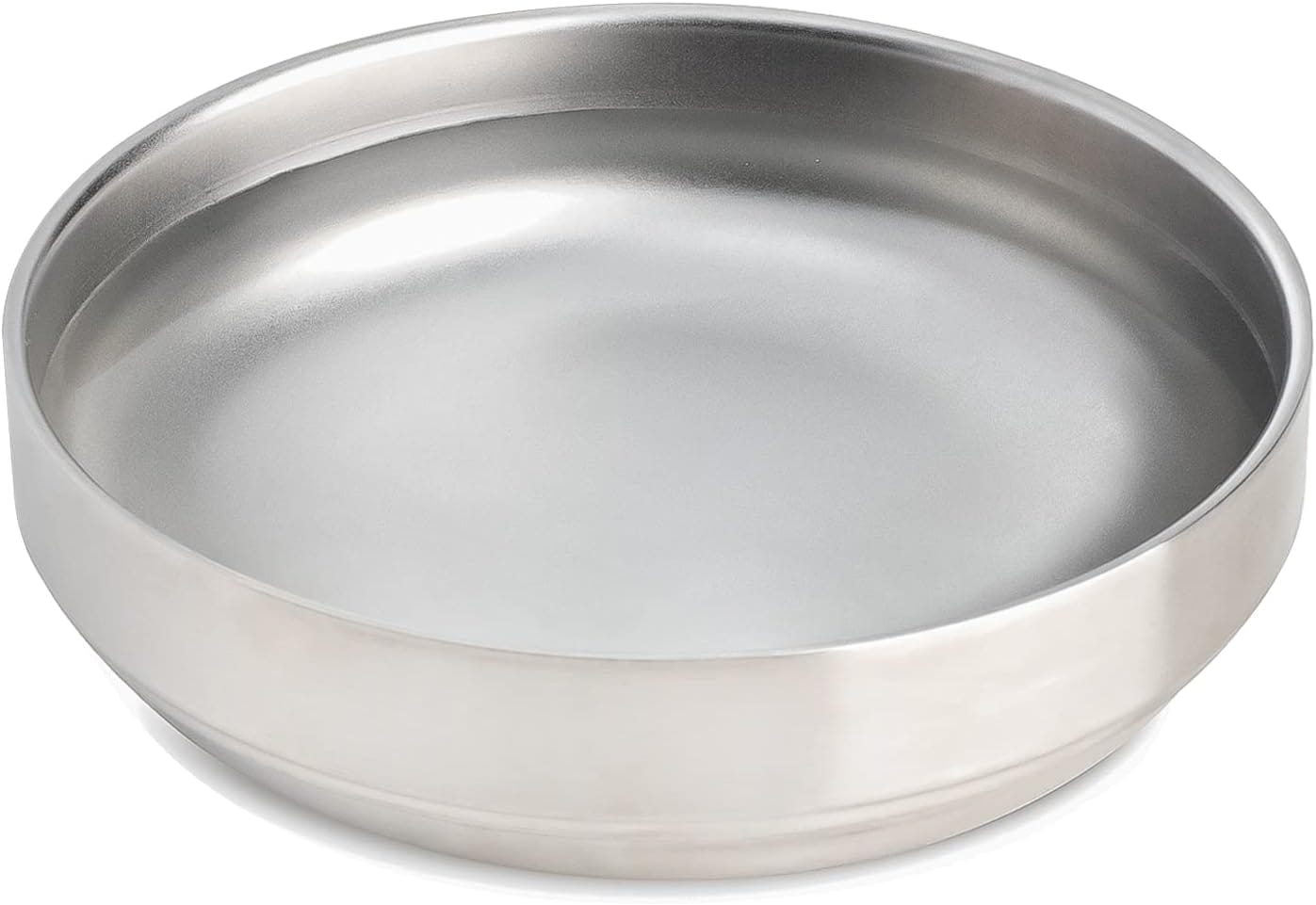
Wide Stainless Steel Feeding Bowl for Cats
Our Pick Recommended for New Owners
A simple wide bowl that is easy to wash and useful for either food or water. We prefer having at least two inserts available so a clean one is always ready.




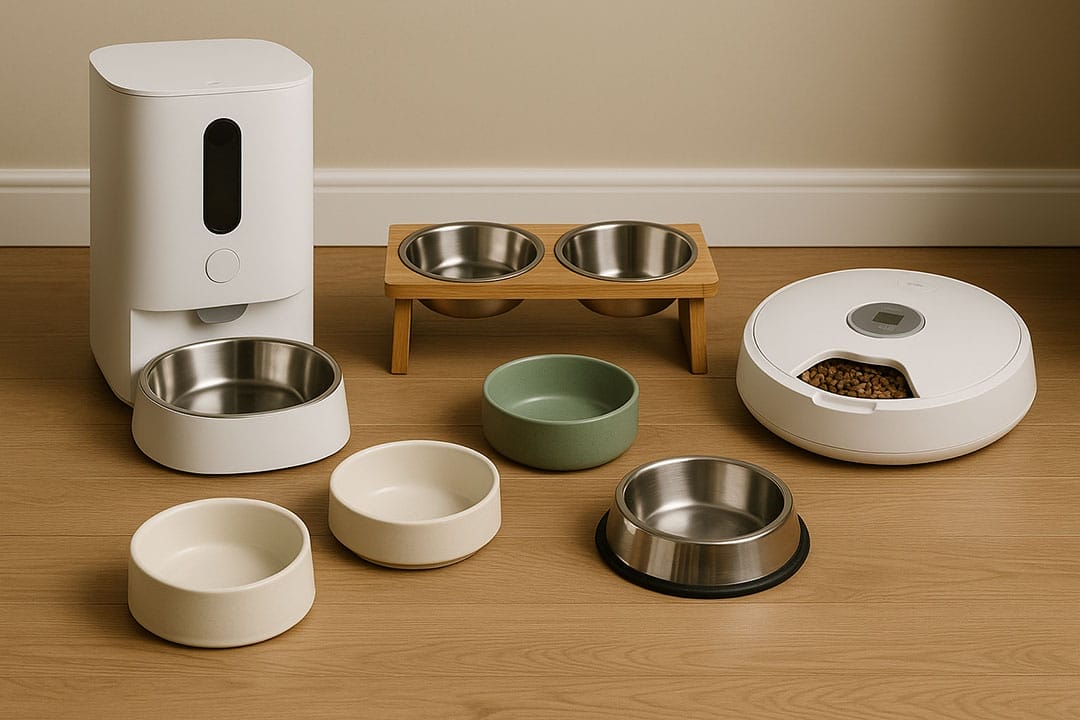
How to choose a cat bowl when so many of them look almost identical? We start with the small things that matter at every meal: can the cat approach the food comfortably, do the whiskers constantly touch the rim, does the bowl slide across the floor, and can we wash it without turning it into a project?
Many bowls of different sizes, materials and shapes have passed through our home and cattery. Some were beautiful but completely impractical. Others looked very ordinary and the cats accepted them immediately. So we are not going to tell you that one perfect bowl exists for every cat. This guide will help you choose the right bowl for your cat and your daily routine.
If you are buying your first cat bowl and do not know where to begin, we would choose a simple stainless steel bowl or good-quality glazed ceramic. It should be wide enough that your cat does not need to push the whole face into a deep dish.
No material stays clean by itself. For us, the best material is smooth, undamaged and practical enough that we will actually wash it regularly. In real life, that matters more than trying to declare one surface perfect for every cat.
| Material | What we like | What to check |
|---|---|---|
| Stainless steel | Light, durable and easy to wash when the steel is good quality. Removable steel inserts are especially practical for everyday use. | A thin bowl can slide or rattle. Use a stable holder and replace a dish that is badly scratched or damaged. |
| Glazed ceramic | Heavier and stable, and many cats accept it readily. A good choice when the bowl has a permanent place. | Inspect the rim and glaze. Stop using a bowl that is chipped or cracked. |
| Glass | Smooth, does not retain odours easily, and makes it simple to see whether the dish is really clean. | It can break, so it is not ideal where bowls are moved or knocked over often. |
| Plastic | Light, affordable and convenient for travel. | Plastic can become scratched and retain smells over time. Inspect it regularly and replace it when the surface is no longer smooth. |
| Silicone | Collapsible silicone bowls are useful for a carrier, cat show or trip. | For permanent home use, we find a rigid bowl easier because it does not bend while the cat eats. |
Our BOF bowls have a 3D-printed outer holder, but food does not touch that part. A removable stainless steel insert sits inside the holder. You can take it out for washing, while the outer part is cleaned by hand.
Cat whiskers are sensitive, so it is easy to understand why some cats dislike pushing their head into a narrow, deep bowl. You may have heard the expression whisker fatigue or whisker stress. It sounds convincing, but we would not present it as a proven medical diagnosis.
In a study of 40 household cats, a wide “whisker-friendly” bowl did not make the cats eat more, eat for longer or drop less food. Some cats still preferred the new dish. The honest conclusion is simple: a wide and shallow bowl may feel more comfortable, but it is not a medical requirement for every cat.
Watch what happens during a meal. If your cat pulls food onto the floor, pauses often, approaches from the side or prefers a flat plate, try a wider and shallower bowl. If the cat eats calmly from the current dish, there is no reason to replace it only because of a popular term online.
A healthy adult cat can eat normally from a bowl on the floor. An elevated bowl or tilted feeder is not automatically healthier, and we will not promise improved digestion. What we can say from everyday experience is that some cats appear more relaxed when they do not need to lower the head as far, or when the food gathers toward the front of the dish.
That shape may be practical for an older cat or one with reduced mobility, but the height must suit the individual animal. If your cat seems painful, struggles to bend, loses appetite or suddenly changes eating habits, choosing a new bowl is not a substitute for speaking to a veterinarian.
A simple home test is to offer the same familiar food in two stable bowls of different heights for a few days. Do not change the food at the same time. This makes it easier to see whether your cat genuinely chooses the elevated bowl or is simply curious about a new object.
Even the best cat bowl will not help if it stands where the cat does not feel comfortable. Keep food away from the litter tray, busy walkways and noisy appliances. A water bowl does not have to be placed next to food; many cats prefer to drink at another quiet location.
In a multi-cat home, provide more than one feeding location. AAFP and ISFM guidance recommends separate resources so cats do not have to eat and drink side by side unless they choose to. We see this clearly in our cattery: two cats can be best friends on the sofa and still want personal space at mealtime.
If your cat prefers running water, read our guide to cat fountains. A water fountain can be the main drinking point, while a classic bowl remains a useful backup in another room.
An automatic feeder can help with a regular dry-food schedule, but it does not replace checking how much each cat actually eats. In a multi-cat household, a microchip feeder may be useful when cats need different food or one steals from the others. Before buying, check how easily the food-contact parts can be removed and washed, whether portions are consistent, and what happens if the power or Wi-Fi fails.
Our rule is simple: if you can see or feel food residue, it is time to wash the dish. We wash a wet-food bowl after the meal. Dry-food and water bowls are also emptied and cleaned regularly instead of simply adding fresh contents on top of the old.
Always follow the manufacturer’s instructions. With BOF models, the metal insert can be removed and washed in a dishwasher, while the outer holder is washed by hand. Rinse everything thoroughly so no strong detergent smell remains.
Do not assume that one material is always hygienic and another is always dirty. Research into bowl contamination is still limited, especially when we speak specifically about cats. A smooth, undamaged surface and regular cleaning are more useful practical criteria than big claims about a material.
We created our bowls because we wanted to combine a practical removable dish with a holder that looks good in the home. The differences are not only decorative. Each model suits a slightly different situation.
| Model | Best if… | Insert size | What makes it different |
|---|---|---|---|
| ERGO | your cat prefers a slightly raised and tilted feeding position | 13 cm inner diameter; holder up to 8 cm high | the tilt gathers food toward the front |
| CORE | you want the cat’s name on the bowl or are choosing a gift | 13 cm standard; 10 cm small version | two sizes and a personalised inscription |
| AIR | you want a light, open design that blends quietly into the room | 13 cm inner diameter | open ribbed form, with or without a name |
| RIDGE | you want a stronger design object in the interior | 13 cm inner diameter | pronounced texture and a solid, stable form |
A 13 cm insert suits many adult cats, but it is not a universal bowl size. A large British Shorthair or a cat that dislikes whisker contact may prefer an even wider, flatter plate. Look at how your cat uses the current bowl before ordering.


For a broader look at the products we use in daily life, visit our guide to the best cat supplies.
Not everyone needs a designer holder or personalisation. If you simply want a wide stainless steel dish or a heavier elevated ceramic bowl, these are two options we already recommend on our equipment page.
Note: the links below lead to Amazon.de. If you buy through them, we may receive a small commission at no extra cost to you.

A new dish seems like a small change to us, but it brings a new shape, smell and sound for the cat. You do not need to remove the old bowl immediately. Put the new one beside it and offer a small amount of familiar food in both. Let your cat investigate without pressure.
The best type is a stable bowl with a smooth, undamaged surface that is easy to clean. Many cats are comfortable with a wide and shallow stainless steel, ceramic or glass dish.
Many cats seem more comfortable with a shallow bowl because the face and whiskers have more room. Preference varies, so watch whether your cat eats calmly or pulls food out onto the floor.
Both can be good choices. Stainless steel is light, durable and easy to clean. Ceramic is heavier and stable, but the glaze and rim should be checked for chips or cracks.
Not every plastic bowl is automatically unsafe. Problems begin when the surface becomes scratched, retains odours or can no longer be cleaned properly. Inspect it often and replace it when it is no longer smooth.
The term is popular, but a study of 40 cats did not find that a wide bowl increased food intake or eating time, or reduced dropped food. Some cats did prefer the new bowl, so offering a wider dish makes sense if your cat appears uncomfortable with high sides.
There is not enough evidence to promise better digestion for a healthy cat simply because the bowl is higher. Some older cats or cats with limited mobility may prefer an elevated position, but the choice should suit the individual cat and, when needed, veterinary advice.
Give each cat a calm feeding place and arrange food and water so one cat cannot block another. The bowls do not all need to be in the same room or stand beside one another.
The best cat bowl is not the one with the longest list of health promises. It is the dish from which your cat eats calmly, that stays in place and that you can keep clean without difficulty.
Begin with a smooth, stable and sufficiently wide bowl. Then watch your cat: is the depth comfortable, do the whiskers constantly touch the rim, and does the cat prefer a flat or slightly elevated surface? If the current bowl works, you do not need to replace it for a trend. If your cat pushes it away, avoids it or removes food to eat from the floor, trying another shape is worthwhile.
You can see all our BOF cat bowls in one place. For more tips and everyday videos of our British Shorthairs, visit the Beauty of Freya YouTube channel.